The term “skin barrier repair cream” has become one of the most searched phrases in skincare, and for good reason. More people than ever are dealing with reactive, sensitised, chronically dry skin that doesn’t respond to conventional moisturisers. The problem isn’t hydration. The problem is structural. Their skin barrier is damaged, and even the most expensive standard moisturiser isn’t designed to fix it.
A genuine barrier repair moisturiser does something quite different from a regular cream. It doesn’t just sit on the surface trapping moisture. It supplies the specific lipids, protective molecules, and signalling compounds that the stratum corneum needs to physically rebuild its structure. Understanding this distinction is the first step towards choosing a skin barrier cream that delivers measurable results rather than temporary comfort.
What a Skin Barrier Repair Cream Actually Does
To understand what separates a skin barrier repair cream from a regular moisturiser, you need to understand the structure it’s trying to repair. The skin barrier (the stratum corneum) is built like a brick wall. The “bricks” are flattened corneocytes (dead skin cells packed with keratin), and the “mortar” is a precisely organised lipid matrix made of ceramides, cholesterol, and free fatty acids in roughly equal proportions.
A conventional moisturiser works through occlusion and humectancy. It pulls water into the upper skin layers (humectants like glycerin) and then traps it there with a film-forming layer (occlusives like petrolatum or dimethicone). This reduces transepidermal water loss temporarily, which is why skin feels softer after application. But the underlying structural damage remains untouched. The mortar is still crumbling. The moment you stop applying the product, TEWL returns to its elevated baseline.
A properly formulated skin barrier repair cream takes a different approach. Instead of merely masking the symptoms of barrier dysfunction, it supplies the raw materials (ceramides, cholesterol, and fatty acids) that the stratum corneum uses to rebuild its own lipid matrix. It also includes protective and anti-inflammatory compounds that shield the barrier while it heals, preventing re-damage during the recovery window.
A moisturiser manages symptoms. A skin barrier repair cream addresses the cause. One keeps skin comfortable; the other actually fixes what’s broken.
The Science of Barrier Repair: Ceramides, Cholesterol, and Fatty Acids
The lipid matrix of the stratum corneum is not a random collection of fats. It’s a highly ordered lamellar structure: layers of lipids arranged in parallel sheets that create a waterproof, semi-permeable seal. Research by Elias and colleagues has established that this matrix requires three lipid classes in specific proportions: approximately 50% ceramides, 25% cholesterol, and 25% free fatty acids.
The approximate molar ratio of ceramides to cholesterol to fatty acids required for optimal barrier function. Supplementing only one lipid can actually impair rather than improve recovery.
This is a critical point that many barrier repair products get wrong. Research published in the Journal of Clinical Investigation by Man, Feingold, and Elias demonstrated that applying any single lipid class alone (ceramides without cholesterol, or cholesterol without fatty acids) actually delayed barrier recovery compared to applying all three together. The lipid matrix is a system. Each component depends on the others to form proper lamellar structures. A skin barrier cream that contains only ceramides but ignores cholesterol and fatty acids is working against the very biology it claims to support.
This is why ingredient lists matter. An effective barrier repair moisturiser will contain all three lipid classes, ideally at concentrations high enough to measurably supplement the skin’s own production, not just appear on a label for marketing purposes.
Key Ingredients in an Effective Skin Barrier Repair Cream
Beyond the foundational lipid trio, several ingredients have robust clinical evidence supporting their role in barrier repair. Here’s what the research says about each.
Ceramides NP, AP, and EOP
Human skin contains at least twelve distinct ceramide subclasses, but three are considered most critical for barrier function: ceramide NP (the most abundant), ceramide AP (which forms long-chain lamellar structures), and ceramide EOP (which links the lipid matrix to the corneocyte envelope, acting as a molecular anchor). A skin barrier repair cream that includes all three provides the broadest foundation for lipid matrix reconstruction.
Research by Imokawa and colleagues showed that patients with atopic dermatitis, one of the most severe forms of barrier dysfunction, had significantly reduced ceramide levels in the stratum corneum. Topical ceramide supplementation measurably improved TEWL, hydration, and clinical symptoms. This finding has been replicated across multiple studies and forms the scientific basis for ceramide-based barrier repair.
Ectoin
While ceramides rebuild the lipid mortar, ectoin works at the cellular level. Ectoin is an extremolyte, a natural stress-protection molecule produced by bacteria that survive in extreme environments. In skincare, it forms a “kosmotropic” hydration shell around cell membranes, stabilising their structure under oxidative, thermal, and UV stress.
A randomised, vehicle-controlled clinical trial by Heinrich, Garbe, and Tronnier (2007) found that ectoin significantly reduced UV-induced skin damage, improved skin hydration, and decreased roughness. For barrier repair, this is significant: ectoin protects the living keratinocytes beneath the stratum corneum that are responsible for producing the lipids the barrier needs. If those cells are stressed or damaged, lipid production slows regardless of what you apply topically. Ectoin ensures the skin’s lipid factory keeps running while the barrier rebuilds above it.
Hyaluronic Acid (Multi-Weight)
Hyaluronic acid is a humectant, not a barrier repair ingredient per se, but it plays a supporting role. High-molecular-weight HA forms a moisture-retaining film on the skin’s surface, reducing TEWL while the barrier heals. Low-molecular-weight HA penetrates deeper, hydrating the viable epidermis and supporting the plumpness that helps corneocytes lie flat and pack tightly. The best barrier repair creams use multiple molecular weights to address both surface and deeper hydration simultaneously.
Niacinamide (Vitamin B3)
Niacinamide has one of the strongest evidence bases in skincare for barrier support. At concentrations of 2 to 5%, it stimulates the production of ceramides and other intercellular lipids by keratinocytes, effectively boosting the skin’s own barrier repair machinery. A study by Tanno et al. (2000) demonstrated that niacinamide upregulates serine palmitoyltransferase, the rate-limiting enzyme in ceramide biosynthesis, leading to increased ceramide levels and improved barrier function within weeks.
Niacinamide is also anti-inflammatory, reduces hyperpigmentation, and supports collagen synthesis. It’s one of the rare actives that actively helps barrier repair rather than compromising it, making it ideal for inclusion in a skin barrier cream.
Peptides
Peptides are short chains of amino acids that act as signalling molecules in the skin. Specific peptides (palmitoyl tripeptide-1, palmitoyl tetrapeptide-7, and copper peptides) have been shown to support collagen production, reduce inflammation, and support the structural integrity of the dermal matrix that underlies the barrier. While peptides don’t directly rebuild the lipid matrix, they strengthen the foundation that the barrier sits on, which accelerates overall recovery.
The most effective barrier repair creams combine ceramides, ectoin, hyaluronic acid, niacinamide, and peptides. Together, these address lipid replacement, cellular protection, hydration, endogenous lipid production, and structural support simultaneously.
Ingredients to Avoid in a Barrier Repair Cream
What a skin barrier repair cream excludes is as important as what it includes. Several common skincare ingredients actively undermine barrier repair, and their presence in a product marketed for barrier recovery is a red flag.
Fragrance (parfum). Synthetic and natural fragrances are among the top five causes of contact dermatitis globally. They offer zero therapeutic benefit and create a cumulative sensitisation risk. A barrier repair cream that contains fragrance is contradicting its own purpose by introducing a known irritant into skin that is already compromised. If you see “parfum,” “fragrance,” or “essential oil blend” on a barrier cream label, keep looking.
Alcohol denat (denatured alcohol). High concentrations of denatured alcohol dissolve lipids on contact. In a product designed to rebuild the lipid matrix, this is counterproductive. Note: fatty alcohols like cetyl alcohol and cetearyl alcohol are not the same thing. These are emollients that actually support barrier function.
Sulphate surfactants (SLS/SLES). These aggressive cleansing agents strip barrier lipids. They shouldn’t appear in a leave-on barrier cream, but check your cleanser as well. Pairing a barrier repair moisturiser with a sulphate-based cleanser undermines the repair process every time you wash your face.
High-concentration exfoliating acids. AHAs, BHAs, and PHAs accelerate cell turnover. During active barrier repair, the goal is the opposite: slowing turnover to allow the lipid matrix to fully form between cells before they shed. A barrier repair cream should not contain glycolic acid, salicylic acid, or any exfoliant above trace levels.
How to Choose Between Barrier Repair Products
The barrier repair category has grown rapidly, and not every product labelled as a “skin barrier cream” is equally effective. Here are the criteria that matter most when evaluating options.
Check for the full lipid trio. Ceramides alone are not enough. Look for products that include ceramides, cholesterol (or phytosterols), and fatty acids together. As the research by Man, Feingold, and Elias established, incomplete lipid supplementation can delay rather than accelerate barrier recovery.
Look for disclosed concentrations. A product can claim to contain ceramides while including them at 0.001%, far below any therapeutically relevant level. Brands that disclose exact percentages of key actives are signalling confidence in their formulation. Brands that hide behind proprietary blends may be relying on marketing rather than meaningful concentrations.
Prioritise fragrance-free formulations. This should be non-negotiable for a barrier repair product. Fragrance serves no repair function and introduces sensitisation risk. A skin barrier repair cream that contains fragrance is making a cosmetic choice at the expense of its therapeutic purpose.
Consider multi-functional formulations. A barrier repair cream that combines lipid replacement (ceramides), cellular protection (ectoin), endogenous lipid stimulation (niacinamide), hydration (hyaluronic acid), and structural support (peptides) in a single product eliminates the need for a complex multi-step routine. During barrier recovery, fewer products means fewer opportunities for irritation.
The Role of Ectoin in Accelerating Barrier Repair
Most barrier repair discussions focus on what you put into the lipid matrix. Ectoin addresses a different question: how do you protect the cells that build the lipid matrix?
The keratinocytes in the stratum granulosum are responsible for synthesising and secreting the lamellar bodies that become the barrier’s lipid mortar. When these cells are under stress from UV exposure, pollution, inflammation, or oxidative damage, their lipid output decreases. This is why barrier damage is often self-perpetuating: the damaged barrier allows more environmental stress through, which stresses the cells that produce barrier lipids, which further weakens the barrier.
Ectoin breaks this cycle. By forming a kosmotropic water shell around cell membranes, it stabilises keratinocyte function under stress conditions. Clinical research has shown that ectoin reduces UV-induced Langerhans cell depletion (protecting the skin’s immune function), decreases inflammatory cytokine release, and improves skin hydration independently of occlusion. For barrier repair specifically, this means that ectoin allows the skin’s own lipid-producing machinery to operate at closer to full capacity, even while the barrier above is still compromised.
Ceramides are the building materials. Ectoin protects the builders. The most effective skin barrier repair cream addresses both, because rebuilding the mortar is pointless if the cells producing it are under siege.
How Long Does Barrier Repair Take?
Timelines vary depending on severity, but the clinical literature provides useful benchmarks. Mild barrier disruption (the kind caused by a few weeks of over-exfoliation or a reaction to a new product) typically resolves within two to four weeks of consistent use of a barrier repair cream, provided the offending product has been removed.
Moderate damage, such as chronic sensitisation from long-term use of harsh cleansers or fragrance-heavy products, generally requires four to eight weeks. The lipid matrix needs multiple turnover cycles to fully restructure, and each cycle takes approximately two weeks in healthy skin.
Severe or chronic barrier dysfunction, including conditions like eczema or rosacea where barrier impairment is a core feature, may take eight to twelve weeks or longer and may benefit from medical supervision in addition to topical barrier repair. For more on managing eczema-prone skin, see our guide to the best moisturiser for eczema.
The typical range for barrier recovery, depending on severity. Consistency matters more than intensity. Twice-daily application of a barrier repair cream outperforms sporadic use of multiple products.
The single most important variable in repair speed is removal of the cause. No barrier repair cream can outpace ongoing damage. If you’re still using a foaming cleanser, a fragrance-heavy toner, or daily exfoliants, the barrier cannot rebuild faster than it’s being stripped. Step one is always elimination. Step two is repair.
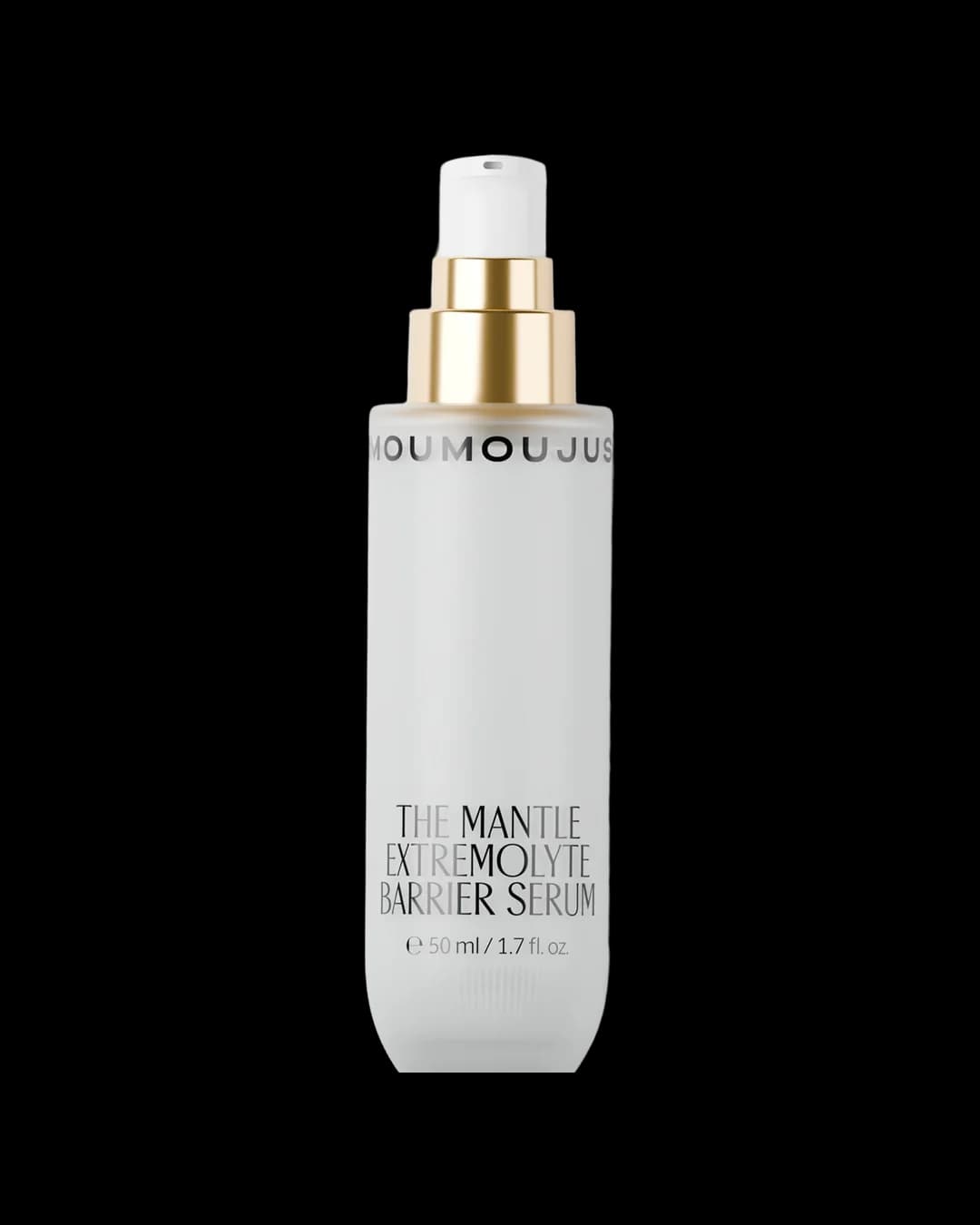
Why The Mantle Combines Every Barrier Repair Ingredient with Zero Fillers
When we formulated The Mantle, we started with a straightforward question: what would a skin barrier repair cream look like if every ingredient decision was driven by the clinical literature rather than marketing trends, cost optimisation, or sensory appeal?
The answer was a formulation built around the five pillars of barrier repair: a 3% ceramide complex (NP, AP, and EOP with cholesterol and fatty acids in physiological ratios), 1.5% ectoin for cellular protection, niacinamide to stimulate endogenous ceramide production, multi-weight hyaluronic acid for layered hydration, and a 2% peptide complex for structural dermal support. The key doses are published.
What The Mantle doesn’t contain is equally deliberate: no fragrance, no essential oils, no alcohol denat, no sulphates, no exfoliating acids. Nothing that could undermine the repair process. Every ingredient either actively contributes to barrier recovery or supports the delivery system that ensures actives reach the stratum corneum effectively. Zero fillers. Zero compromises.
The result is a single product that replaces the multi-step barrier repair routines that have become common, routines that often introduce more variables (and more potential irritants) than damaged skin can handle. One product. Full disclosure. Every ingredient earning its place.
One serum. Complete barrier repair.
The Mantle delivers a 3% ceramide complex, 1.5% ectoin, 2% peptide and hyaluronic acid, with the key doses published. Fragrance-free, filler-free, built for damaged barriers.
Shop The Mantle →References: Elias PM (2005). Stratum corneum defensive functions: an integrated view. Journal of Investigative Dermatology, 125(2), 183-200. · Man MQ, Feingold KR, Elias PM (1993). Exogenous lipids influence permeability barrier recovery in acetone-treated murine skin. Archives of Dermatology, 129(6), 728-738. · Imokawa G et al. (1991). Decreased level of ceramides in stratum corneum of atopic dermatitis. Journal of Investigative Dermatology, 96(4), 523-526. · Heinrich U, Garbe B, Tronnier H (2007). In vivo assessment of ectoin: a randomised, vehicle-controlled clinical trial. Skin Pharmacology and Physiology, 20(4), 211-218. · Tanno O et al. (2000). Nicotinamide increases biosynthesis of ceramides as well as other stratum corneum lipids to improve the epidermal permeability barrier. British Journal of Dermatology, 143(3), 524-531. · Holleran WM et al. (1991). Processing of epidermal glucosylceramides is required for optimal mammalian cutaneous permeability barrier function. Journal of Clinical Investigation, 88(5), 1338-1345.
Disclosure: This article is published by Moumoujus. Our product, The Mantle, contains ceramides, ectoin, and the other ingredients discussed in this piece. We have aimed to present the research accurately and encourage independent verification of all claims made.