
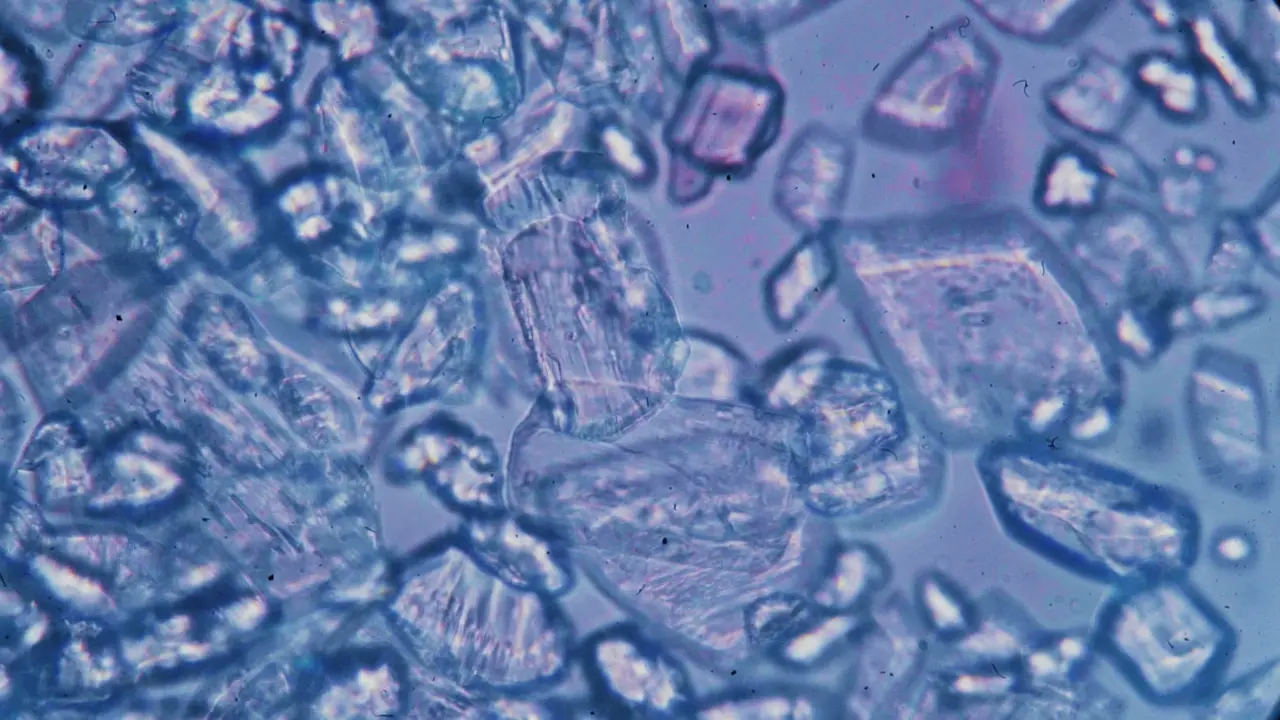
If you follow skincare science rather than skincare trends, you may have noticed a quiet shift in the ingredients dermatologists and cosmetic chemists are talking about. Alongside the familiar names (retinol, niacinamide, hyaluronic acid) a less well-known molecule called ectoin has been steadily accumulating research attention.
Ectoin isn’t new. It was first identified in the 1980s. But its application in skincare formulations, particularly in ectoin cream and serum products, has only gained real momentum in the last decade. Here’s what the science actually says, stripped of marketing language.
What Is Ectoin?
Ectoin is a cyclic amino acid, a small, water-soluble molecule with the chemical name 1,4,5,6-tetrahydro-2-methyl-4-pyrimidinecarboxylic acid. It belongs to a class of compounds called compatible solutes, molecules that organisms produce to protect their cellular structures from environmental stress without interfering with normal biological function.
It was first discovered in 1985 by Galinski and colleagues in the bacterium Halomonas elongata, a microorganism that thrives in hypersaline environments like salt lakes, salt flats, and other places where most life simply cannot survive. The name “ectoin” derives from ectoine, referencing the ectopic (extreme) habitats where these bacteria are found.
Extremophilic bacteria have been producing ectoin as a survival mechanism for billions of years, making it one of the oldest stress-protection molecules in nature.
How Extremophytes Survive, and What That Means for Your Skin
Extremophytes and extremophilic bacteria live in environments that would destroy most biological organisms: extreme heat, extreme cold, high UV radiation, intense salinity. They survive because they produce protective molecules like ectoin that stabilise their cell membranes and proteins under stress.
Ectoin achieves this through a mechanism called preferential exclusion. Rather than binding directly to proteins or cell membranes, ectoin organises water molecules into a protective hydration shell around biological structures. This shell acts as a physical buffer, shielding cells from heat, desiccation, UV radiation, and oxidative damage without altering their normal function.
Ectoin doesn’t change your cells. It changes the water around them, creating a molecular shield that absorbs environmental stress before it reaches the cell membrane.
This is what makes ectoin fundamentally different from most skincare actives. It doesn’t accelerate turnover like retinol. It doesn’t exfoliate like acids. It protects: passively, continuously, and without irritation.
What Ectoin Does for Skin: The Research
The body of research on ectoin skincare applications has grown substantially since the early 2000s. Four areas stand out.
1. UV Protection and Photoageing Defence
One of the most cited studies on ectoin in dermatology is the 2007 research by Heinrich et al., published in Skin Pharmacology and Physiology. The study demonstrated that topical application of ectoin significantly reduced UV-induced skin damage, including the suppression of Langerhans cell depletion, a key marker of immune damage caused by sun exposure. Ectoin was shown to prevent the formation of sunburn cells and reduce DNA mutation triggered by UVA radiation.
This matters because Langerhans cells are the skin’s frontline immune sentinels. When UV radiation depletes them, the skin becomes immunocompromised locally, a precursor to both photoageing and skin cancer development. Ectoin’s ability to preserve these cells suggests a protective mechanism that goes beyond simple moisturisation.
reduction in UV-induced Langerhans cell damage was observed in skin treated with ectoin, compared to untreated controls (Heinrich et al., 2007).
2. Anti-Inflammatory Properties
Ectoin has demonstrated measurable anti-inflammatory effects in multiple studies. Research published in the Journal of Dermatological Science showed that ectoin inhibits the release of ceramide from cell membranes under stress, a process that triggers inflammatory cascade signalling. Separate research found ectoin reduced the production of pro-inflammatory cytokines in keratinocytes exposed to environmental stressors.
For conditions like rosacea, eczema, and chronic skin sensitivity, where low-grade inflammation is a persistent driver of symptoms, ectoin’s anti-inflammatory profile makes it a compelling ingredient. Crucially, it achieves this without the irritation risks associated with other anti-inflammatory actives like retinoids or high-concentration niacinamide.
3. Deep Hydration Through Water Structuring
Most hydrating ingredients in skincare work by either drawing water to the skin (humectants like hyaluronic acid and glycerin) or trapping water already present (occlusives like petrolatum and dimethicone). Ectoin does something different.
Because of its preferential exclusion mechanism, each ectoin molecule coordinates multiple water molecules into a structured hydration complex. This means ectoin doesn’t just attract water. It organises it into a stable, protective layer. The result is hydration that is more resilient to evaporation and environmental disruption than the free water held by traditional humectants.
Clinical studies have shown that ectoin-treated skin retains measurably higher moisture levels over 24 hours compared to untreated controls, with improvements in transepidermal water loss (TEWL), a key indicator of barrier integrity.
4. Barrier Support and Cell Membrane Stabilisation
The skin barrier is a lipid-rich matrix of ceramides, cholesterol, and fatty acids that sits in the outermost layer of the epidermis. When this barrier is compromised by pollution, harsh cleansers, overwashing, or environmental stress, moisture escapes and irritants penetrate more easily.
Ectoin supports barrier function by stabilising cell membranes directly. Research has shown that ectoin integrates into the hydration layer surrounding lipid bilayers, reinforcing their structural integrity without altering their composition. This makes ectoin particularly effective as a complementary ingredient alongside ceramides. Where ceramides rebuild the barrier lipids, ectoin protects the cellular structures beneath them.
Ectoin vs Hyaluronic Acid: Different Molecules, Different Jobs
The most common question about ectoin skincare is how it compares to hyaluronic acid. The short answer: they’re not competitors. They work through entirely different mechanisms and serve different purposes.
Hyaluronic acid is a large polysaccharide that holds up to 1,000 times its weight in water. It’s an excellent humectant and it draws water to the skin’s surface and plumps the appearance of fine lines. But it offers no inherent protection against UV damage, pollution, or oxidative stress. And in low-humidity environments, high-molecular-weight hyaluronic acid can actually draw moisture from the skin rather than the air.
Ectoin is a much smaller molecule. It doesn’t hold as much water volumetrically, but the water it organises is structurally stable and less prone to evaporation. And unlike hyaluronic acid, ectoin provides direct cellular protection: UV defence, anti-inflammatory activity, and membrane stabilisation.
Hyaluronic acid makes skin feel hydrated. Ectoin helps skin stay protected. The best formulations use both, or pair ectoin with ceramides for barrier repair that works on multiple levels.
How to Use Ectoin in Your Routine
Ectoin is one of the most versatile actives in skincare because of what it doesn’t do: it doesn’t exfoliate, doesn’t increase photosensitivity, doesn’t cause purging, and doesn’t conflict with other actives. This means it can be used morning and evening, alongside retinoids, vitamin C, AHAs, BHAs, and niacinamide without any contraindications.
In ectoin cream formulations, it’s typically found at concentrations between 0.5% and 2%. Research suggests that concentrations of 1% and above deliver measurable protective effects, with the Heinrich UV-protection study using topical preparations at concentrations in the 1-2% range.
For maximum benefit, ectoin works best in leave-on products (moisturisers, serums, or barrier creams) where it has sustained contact with the skin. Rinse-off products like cleansers don’t provide enough contact time for ectoin to form its protective hydration shell.
What to Look For in an Ectoin Product
Not all ectoin skincare products are created equal. As with any active ingredient, concentration matters. A product listing ectoin near the bottom of its INCI list, below preservatives and fragrance, likely contains less than 0.1%, which is below the threshold where published studies have shown meaningful results.
Here’s what to look for:
Disclosed concentration. If a brand uses ectoin at an effective level, they should be willing to say so. Look for products that state the exact percentage on the label or product page. If the percentage isn’t disclosed, it’s reasonable to question whether the concentration is meaningful.
Complementary actives. Ectoin works exceptionally well alongside ceramides (for barrier lipid repair), peptides (for dermal structure support), and antioxidants (for free radical neutralisation). A well-formulated ectoin product will pair it with ingredients that address different layers of skin function rather than duplicating its mechanism.
Fragrance-free formulation. If you’re using ectoin for its anti-inflammatory and barrier support properties, a product loaded with synthetic fragrance undermines the purpose. Fragrance is one of the most common causes of contact sensitisation, the opposite of what a protective ingredient like ectoin is designed to achieve.
The concentration of ectoin in The Mantle by Moumoujus, a fragrance-free barrier repair moisturiser that pairs ectoin with 3% ceramide complex, 2% peptides, and 30+ active ingredients at fully disclosed concentrations.
Ectoin is not a miracle ingredient. No ingredient is. But it is one of the most well-evidenced protective molecules available in cosmetic formulation, with a mechanism of action that is genuinely distinct from the humectants and occlusives that dominate most moisturisers. Its safety profile is excellent, its compatibility with other actives is broad, and the research base continues to grow.
The real question isn’t whether ectoin works. It’s whether the product you’re buying contains enough of it to matter.
Ectoin at clinical strength
The Mantle contains 1.5% ectoin alongside ceramides, peptides, and exosomes. Every percentage disclosed, every concentration backed by research.
Shop The Mantle →References: Galinski EA, Pfeiffer HP, Trüper HG (1985). 1,4,5,6-Tetrahydro-2-methyl-4-pyrimidinecarboxylic acid: a novel cyclic amino acid from halophilic phototrophic bacteria of the genus Ectothiorhodospira. European Journal of Biochemistry, 149(1), 135-139. · Heinrich U, Garbe B, Tronnier H (2007). In vivo assessment of ectoin: a randomised, vehicle-controlled clinical trial. Skin Pharmacology and Physiology, 20(4), 211-218. · Bünger J, Driller H (2004). Ectoin: an effective natural substance to prevent UVA-induced premature photoaging. Skin Pharmacology and Physiology, 17(5), 232-237.
Disclosure: This article is published by Moumoujus. Our product, The Mantle, contains ectoin and is referenced in this piece. We have aimed to present the research accurately and encourage independent verification of all claims made.