If your skin has ever felt tight after cleansing, stung when you applied a product that never bothered you before, or looked red and flaky for no obvious reason, there’s a good chance your skin barrier was compromised. These are among the most common signs of a damaged skin barrier, and they’re more widespread than most people realise.
The skin barrier isn’t a marketing concept. It’s a measurable, well-studied biological structure. When it fails, the consequences show up in nearly every skin concern you can name: dryness, sensitivity, breakouts, premature ageing, and chronic inflammation. Understanding what the skin barrier is, how it gets damaged, and what actually repairs it is one of the most useful things you can learn about skincare.
What Is the Skin Barrier?
When dermatologists talk about the skin barrier, they’re referring to the stratum corneum (the outermost layer of the epidermis). It’s remarkably thin, roughly 10 to 30 micrometres, yet it serves as the primary interface between your body and the outside world. Its job is deceptively simple: keep moisture in and keep irritants, pathogens, and pollutants out.
The structure of the skin barrier is often described using the bricks and mortar model. The “bricks” are corneocytes: flattened, dead skin cells filled with keratin that provide physical structure. The “mortar” is the lipid matrix, a carefully organised blend of ceramides, cholesterol, and free fatty acids that fills the spaces between corneocytes, sealing them together into a cohesive, water-resistant sheet.
of the lipid matrix in your skin barrier is made up of ceramides. When ceramide levels drop, the barrier loses its ability to retain moisture and block irritants effectively.
This lipid matrix is not random. The ratio of ceramides to cholesterol to fatty acids matters, and research has shown that a roughly equal molar ratio of all three is required for the barrier to function properly. Disrupt that ratio, and the entire structure becomes permeable.
7 Signs Your Skin Barrier Is Damaged
A damaged skin barrier doesn’t always announce itself with a single dramatic symptom. More often, it shows up as a cluster of low-grade issues that worsen gradually. Here are the signs dermatologists look for.
1. Persistent redness. When the barrier is compromised, irritants penetrate more easily, triggering an inflammatory response. The result is diffuse redness that doesn’t resolve with typical calming products, because the problem isn’t on the surface. It’s structural.
2. Tightness after cleansing. Healthy skin should feel comfortable after washing. If your face feels tight, dry, or “squeaky clean,” your cleanser is stripping the lipid matrix faster than your skin can replenish it. This is one of the earliest damaged skin barrier signs most people notice.
3. Stinging or burning with products. Products that previously felt fine now sting on application. This happens because a compromised barrier allows active ingredients to penetrate too deeply, too quickly, reaching nerve endings in the viable epidermis that the stratum corneum normally shields.
4. Flaking and rough texture. When the lipid mortar between corneocytes breaks down, individual cells lift and separate from the surface rather than shedding evenly. The visible result is dry, flaky patches and a rough, uneven skin texture.
5. Increased breakouts. This one surprises people. A damaged barrier increases transepidermal water loss, which triggers the skin to overproduce sebum as a compensatory mechanism. The excess oil, combined with impaired antimicrobial defence, creates ideal conditions for acne-causing bacteria to proliferate.
6. Heightened sensitivity to everything. Wind, temperature changes, fabrics, sunscreen: when the barrier is intact, these are non-events. When it’s compromised, every external factor becomes a potential trigger. If your skin has become “suddenly sensitive,” a weakened barrier is the most likely explanation.
7. Increased transepidermal water loss (TEWL). This one you can’t see directly, but you feel it: skin that never feels truly hydrated no matter how many layers of moisturiser you apply. When the barrier is porous, water evaporates from the skin’s surface faster than products can replace it. High TEWL is the clinical hallmark of barrier dysfunction.
A damaged skin barrier doesn’t just cause dryness. It destabilises everything: hydration, oil production, immune response, and the skin’s ability to tolerate active ingredients.
What Causes a Damaged Skin Barrier?
The skin barrier is resilient, but it has limits. Most barrier damage comes from well-intentioned skincare habits rather than neglect.
Over-exfoliation. AHAs, BHAs, scrubs, enzyme peels, exfoliating toners. Used in moderation, chemical exfoliation can improve texture and tone. Used too frequently, or layered from multiple products, exfoliation physically strips the lipid matrix and accelerates corneocyte loss faster than the skin can regenerate. This is the single most common cause of barrier damage in otherwise healthy skin.
Harsh cleansers. Sulphate-based surfactants (SLS, SLES) are extremely effective at removing oil, including the lipids your barrier needs. Foaming cleansers that leave skin feeling “squeaky” are systematically dissolving the mortar between your skin cells with every wash.
Fragrance in skincare. Synthetic and natural fragrances are among the most common causes of contact dermatitis and skin sensitisation. They don’t just irritate on contact. Chronic exposure to fragrance allergens can progressively weaken the barrier over time, creating cumulative sensitivity that appears to come from nowhere.
Retinol overuse. Retinoids accelerate cell turnover, which is useful for anti-ageing and acne. But if the rate of turnover exceeds the skin’s ability to rebuild its lipid matrix, the barrier thins. The peeling, redness, and sensitivity that often accompany retinol introduction are signs of temporary barrier disruption, and in some cases, the disruption becomes chronic.
Environmental stress. Cold weather strips humidity from the air. Central heating strips it from indoor spaces. UV radiation generates free radicals that degrade barrier lipids directly. Pollution deposits particulate matter that triggers oxidative stress on the skin’s surface. All of these erode the barrier gradually, which is why skin often feels worst during winter or in urban environments.
How Long Does It Take to Repair a Damaged Skin Barrier?
The honest answer: it depends on the severity. Research on barrier recovery suggests that mild disruption (the kind caused by a few weeks of over-exfoliation) can resolve in two to four weeks with appropriate care. More significant damage, especially from chronic exposure to irritants or long-term use of harsh products, can take eight to twelve weeks or longer.
is the typical recovery time for mild barrier damage, assuming the cause has been removed and barrier-supportive ingredients are applied consistently. Severe damage may take 8-12 weeks.
The critical variable is not which products you add. It’s which products you remove. The barrier cannot repair itself while the thing damaging it is still being applied every morning and evening. Step one is always elimination.
How to Repair Your Skin Barrier
Barrier repair is not about adding more products. It’s about creating the conditions for your skin to rebuild its own lipid matrix. Here’s what the research supports.
1. Simplify Your Routine
Consider simplifying cosmetic products that irritate your skin, while keeping a gentle cleansing, moisturising and sun-protection routine. If you use a prescribed treatment, ask your prescriber before changing it.
2. Replenish Ceramides
Since ceramides make up roughly half the lipid matrix, replacing them topically is the most direct route to barrier repair. Look for products containing ceramide NP, ceramide AP, and ceramide EOP, the three ceramide types most abundant in human skin. Research by Imokawa and colleagues has demonstrated that topical ceramide application measurably improves barrier function and reduces TEWL in compromised skin.
3. Switch to a Gentle, Non-Foaming Cleanser
Replace sulphate-based cleansers with a gentle, low-pH formula that cleans without stripping. Cream, milk, or micellar cleansers are less likely to dissolve barrier lipids. The goal is to remove surface impurities while leaving the lipid matrix intact.
4. Protect with SPF Daily
UV radiation doesn’t just cause photoageing. It also directly degrades ceramides and triggers oxidative stress in the stratum corneum. A compromised barrier is even more vulnerable to UV damage because its reduced lipid density means less natural UV filtering. Broad-spectrum SPF 30 or higher is non-negotiable during recovery.
5. Use Ectoin for Cellular Protection
While ceramides rebuild the lipid mortar, ectoin works at a deeper level, stabilising cell membranes and organising water molecules into a protective hydration shell around cellular structures. Research has shown that ectoin reduces UV-induced immune damage, suppresses inflammatory signalling, and improves moisture retention. It’s one of the most effective ingredients for protecting the barrier while it repairs, without any irritation risk.
Ceramides rebuild the mortar between skin cells. Ectoin protects the cells themselves. The most effective approach to barrier repair addresses both.
Ingredients That Repair vs Ingredients That Damage
Barrier-supportive ingredients: ceramides, cholesterol, fatty acids, ectoin, squalane, niacinamide (at 2-5%), centella asiatica, panthenol, glycerin, allantoin, and peptides that support dermal structure. These ingredients either directly replenish barrier lipids, reduce inflammation, or support the biological processes that maintain the stratum corneum.
Review irritating cosmetics: Scrubs, exfoliating acids or cosmetic retinol may be worth pausing if they irritate. Advice about cosmetics does not override instructions for prescribed retinoids, benzoyl peroxide or other medicines.
Fragrance deserves special mention. Unlike actives that can be reintroduced after recovery, fragrance offers no skincare benefit at any stage. It exists purely for sensory appeal and is one of the top five allergens in cosmetic products. If you’re serious about barrier health, fragrance-free formulations aren’t just for recovery. They’re the baseline.
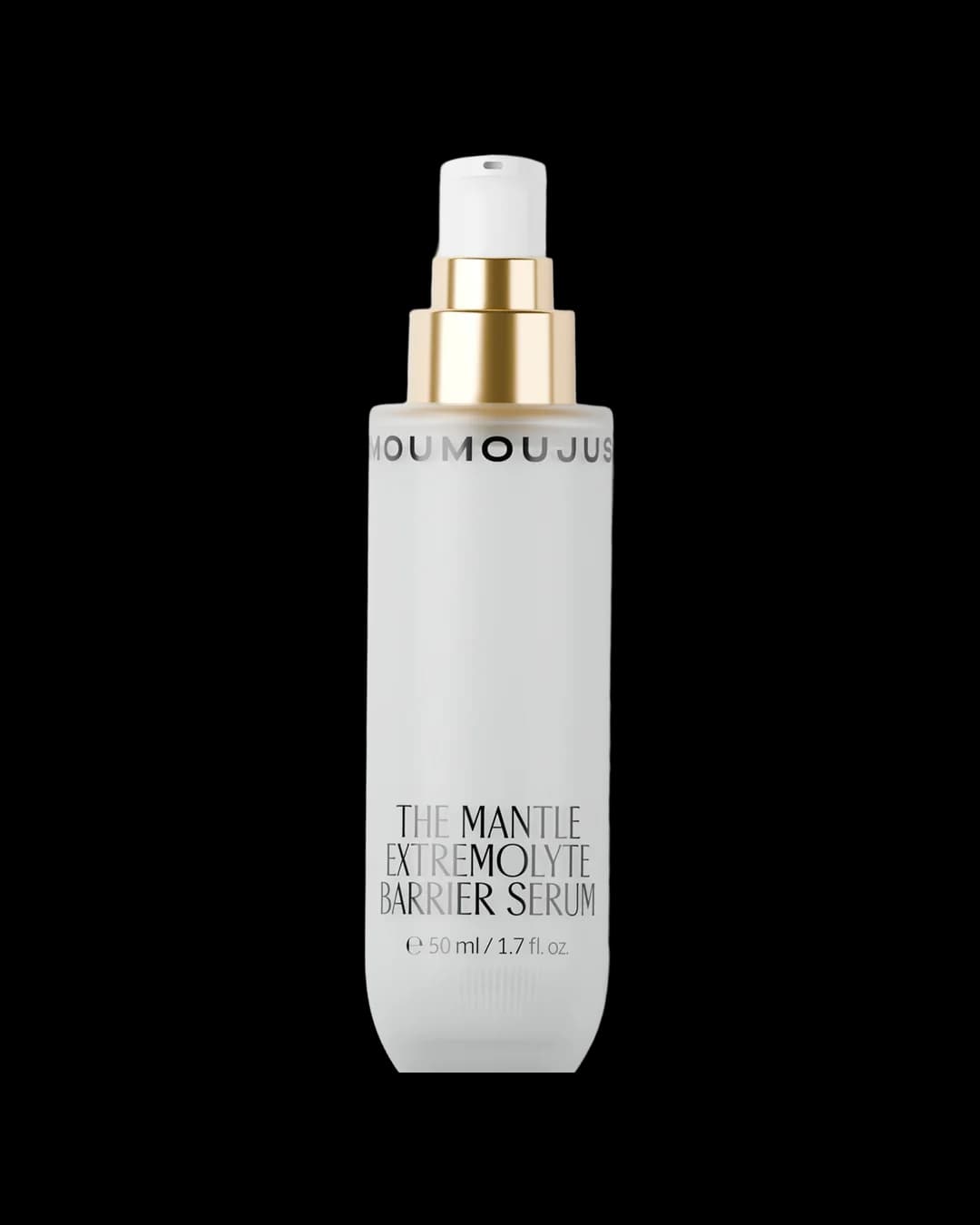
The Mantle is a fragrance-free barrier serum with 1.5% ectoin, a 3% ceramide complex and a 2% peptide blend. The ceramide and peptide percentages refer to ingredient blends, rather than pure ceramide or pure peptide content. Its declared ferment and apple cell culture extract do not by themselves establish an exosome claim.
When to See a Dermatologist
Seek clinical advice for persistent or worsening symptoms rather than waiting a fixed number of weeks. For eczema that becomes painful, hot, blistered or rapidly worse, the NHS advises urgent help.
The skin barrier is not a trend. It’s the foundation that every other skincare goal depends on, from anti-ageing to acne management to hyperpigmentation treatment. If the barrier is compromised, nothing else you apply will work as intended. Repair the barrier first. Everything else follows.
Built for barrier repair
The Mantle is a fragrance-free barrier serum with 1.5% ectoin, a 3% ceramide complex and a 2% peptide blend. The ceramide and peptide percentages refer to ingredient blends, rather than pure ceramide or pure peptide content.
Shop The Mantle →References: Elias PM (2005). Stratum corneum defensive functions: an integrated view. Journal of Investigative Dermatology, 125(2), 183-200. · Imokawa G et al. (1991). Decreased level of ceramides in stratum corneum of atopic dermatitis. Journal of Investigative Dermatology, 96(4), 523-526. · Heinrich U, Garbe B, Tronnier H (2007). In vivo assessment of ectoin: a randomised, vehicle-controlled clinical trial. Skin Pharmacology and Physiology, 20(4), 211-218. · Holleran WM et al. (1991). Processing of epidermal glucosylceramides is required for optimal mammalian cutaneous permeability barrier function. Journal of Clinical Investigation, 88(5), 1338-1345.
Disclosure: This article is published by Moumoujus. Our product, The Mantle, contains ceramides and ectoin and is referenced in this piece. We have aimed to present the research accurately and encourage independent verification of all claims made.