Peptides have earned their place in modern skincare. They’re among the most published active ingredients in dermatological literature, with decades of evidence supporting their role in collagen synthesis, barrier repair, and anti-inflammatory signalling. But there is a question that rarely gets asked: does the product format matter?
The answer is yes, and it matters more than most brands acknowledge. A peptide moisturiser delivers peptides in a very different way than a serum, and for reasons grounded in skin biology, that difference can determine whether those peptides actually reach their target cells or evaporate before they get there.
This guide covers what peptides are, how they function in skincare, why a moisturiser is the optimal vehicle for peptide delivery, which peptide types to look for, and how to evaluate a collagen boosting moisturiser that claims to be “peptide-rich.”
What Are Peptides and How Do They Work in Skincare?
Peptides are short chains of amino acids, typically between 2 and 50 units long. They are the building blocks of proteins, and proteins like collagen, elastin, and keratin are what give skin its structure, bounce, and resilience. When these proteins degrade with age or environmental exposure, the body produces peptide fragments as a signal to start rebuilding.
Synthetic peptides in skincare mimic this natural feedback loop. When applied topically, they communicate with skin cells by instructing fibroblasts to produce more collagen, reducing inflammatory cytokines, and delivering trace minerals to where they’re needed. If you’d like a deeper dive into the science, our complete guide to peptides for skin covers the mechanisms in detail.
There are three primary categories of peptides used in anti ageing moisturiser formulations, each with a distinct mechanism of action.
Signal Peptides
Signal peptides communicate directly with fibroblasts, telling them to ramp up production of collagen, elastin, and fibronectin. The most studied example is palmitoyl pentapeptide-4. A clinical trial published in the International Journal of Cosmetic Science found that palmitoyl pentapeptide-4 reduced wrinkle depth by up to 36% over 12 weeks of consistent use. Palmitoyl tripeptide-1, another signal peptide, has been shown to stimulate collagen I and III synthesis in human fibroblast cultures, making it a staple in research-backed peptide cream formulations.
Carrier Peptides
Carrier peptides transport trace minerals (most notably copper) to the skin. GHK-Cu (copper tripeptide-1) is the most extensively researched carrier peptide in dermatology. First identified by Dr Loren Pickart in the 1970s, copper peptides have been shown to stimulate collagen synthesis, accelerate wound healing, and increase glycosaminoglycan production (the skin’s natural moisture reservoirs). A 2018 review in the Journal of Cosmetic Dermatology found that GHK-Cu influences over 4,000 human genes related to tissue repair, antioxidant defence, and anti-inflammatory signalling.
Enzyme-Inhibitor Peptides
Where signal and carrier peptides build new structure, enzyme-inhibitor peptides protect what already exists. They work by suppressing matrix metalloproteinases (MMPs), the enzymes responsible for breaking down collagen and elastin. UV exposure, pollution, and chronic inflammation cause MMP activity to spike well beyond normal turnover levels, accelerating visible ageing. Enzyme-inhibitor peptides slow this degradation, giving the skin’s repair mechanisms a chance to catch up.
From your mid-twenties onward, collagen production declines by roughly 1% annually. Signal peptides like palmitoyl pentapeptide-4 can help counteract this decline by triggering new collagen synthesis in fibroblasts.
Why a Peptide Moisturiser Outperforms a Peptide Serum
This is where the conversation gets interesting, and where most skincare marketing falls short. Serums are often positioned as the “high-performance” step in a routine, with moisturisers relegated to a supporting role. For certain actives (vitamin C, niacinamide, exfoliating acids) that hierarchy makes sense. For peptides, it does not.
The reason comes down to two principles: occlusion and contact time.
Occlusion enhances penetration. Peptides are relatively large molecules compared to actives like retinol or glycolic acid. Their size makes it harder for them to penetrate the stratum corneum, the outermost barrier of dead skin cells. A moisturiser creates an occlusive layer on the skin’s surface, trapping the peptides underneath and creating a concentration gradient that drives them deeper into the epidermis. A serum, by contrast, evaporates or is absorbed quickly, leaving peptides less time to penetrate.
Extended contact time. Peptides require sustained contact with skin cells to trigger signalling cascades effectively. A moisturiser’s emollient base (typically a blend of lipids, fatty acids, and humectants) keeps peptides in contact with the skin for hours rather than minutes. This extended exposure window gives peptides more opportunity to interact with cell-surface receptors and initiate the biological responses that lead to collagen production and barrier repair.
A serum delivers peptides to the surface. A well-formulated peptide moisturiser holds them against the skin long enough for them to actually work.
Lipid compatibility. Many of the most effective peptides (palmitoyl pentapeptide-4, palmitoyl tripeptide-1) are palmitoylated, meaning they’ve been attached to a fatty acid chain (palmitic acid) specifically to improve their lipid solubility and skin penetration. These palmitoylated peptides are inherently more compatible with the lipid matrix of a moisturiser than the aqueous base of a serum. Formulating them in a lipid-rich environment isn’t just convenient; it’s chemically logical.
Multi-tasking efficiency. A peptide moisturiser can serve as both the active treatment step and the barrier-protection step in your routine. Rather than layering a peptide serum under a separate moisturiser (adding cost, time, and potential formulation conflicts), a single well-formulated anti ageing moisturiser handles both functions simultaneously.
What to Look For in a Peptide Moisturiser
The peptide cream market is vast, and quality varies enormously. Some products contain a single peptide at a negligible concentration, banking on the ingredient’s reputation without delivering a meaningful dose. Others formulate peptides alongside ingredients that undermine them: high-pH bases that destabilise peptide bonds, or synthetic fragrances that trigger the inflammation peptides are supposed to calm.
Here’s what separates an effective peptide moisturiser from a marketing exercise.
Multiple peptide types. A single peptide targets a single pathway. A multi-peptide formulation that combines signal, carrier, and enzyme-inhibitor peptides addresses collagen synthesis, mineral delivery, and protein preservation simultaneously. Look for products that list at least two or three named peptide sequences (palmitoyl pentapeptide-4, copper tripeptide-1, palmitoyl tripeptide-1) rather than a vague “peptide complex.”
Disclosed concentrations. If a brand won’t tell you how much peptide is in the formula, you have no way of verifying whether it meets the thresholds used in published research. Peptides are effective at low concentrations (often between 0.001% and 2%), but “low” and “trace” are very different things.
Barrier-supportive base. A peptide moisturiser should do more than deliver peptides. The base formula itself should support skin barrier function: ceramides to rebuild the lipid matrix, fatty acids to reinforce the mortar between corneocytes, and humectants to draw moisture into the epidermis. If the base is weak, even excellent peptides will underperform because the skin barrier remains compromised.
Fragrance-free formulation. Synthetic fragrance is among the most common sensitisers in skincare. It can provoke subclinical inflammation that degrades collagen and weakens the barrier, which are exactly the problems peptides are formulated to address. An effective anti ageing moisturiser should not contain ingredients that work against its own actives.
Wrinkle depth reduction observed in a 12-week clinical trial of palmitoyl pentapeptide-4, one of the most studied signal peptides in anti-ageing skincare.
Combining Peptides with Ceramides and Ectoin for Synergistic Effects
Peptides work best when they’re not working alone. The most effective collagen boosting moisturiser formulations pair peptides with complementary ingredients that address different layers and mechanisms of skin health simultaneously.
Ceramides. Ceramides are the lipids that form the “mortar” between skin cells in the stratum corneum. They account for roughly 50% of the skin barrier’s lipid content. When ceramide levels drop through ageing, over-cleansing, or environmental stress, the barrier becomes permeable, leading to transepidermal water loss (TEWL), irritation, and increased sensitivity. Replenishing ceramides rebuilds the physical barrier, creating the stable environment that peptides need to function optimally. A leaky barrier lets peptides escape before they can signal; a strong barrier holds them in place.
Ectoin. Ectoin is an extremolyte, a protective molecule produced by bacteria that survive in extreme environments. In skincare, ectoin forms a hydration shell around cell membranes, shielding them from UV damage, pollution, and thermal stress. A 2004 study in the Journal of Dermatological Science demonstrated that ectoin suppressed UVA-induced cell damage and reduced inflammatory markers. When paired with peptides, ectoin protects the very cells that peptides are trying to communicate with, ensuring those signalling messages are received by healthy, functional receptors rather than stressed, damaged ones. For more on this ingredient, see our guide to exosomes and advanced actives.
Ceramides rebuild the wall. Ectoin shields the cells. Peptides send the repair signals. Together, they address skin ageing at every level: surface, barrier, and dermis.
This layered approach (structural repair, cellular protection, and targeted signalling) is what distinguishes a genuinely effective peptide moisturiser from one that simply lists peptides on the label. The synergy between these ingredient classes means the whole performs measurably better than the sum of its parts.
Which Peptide Is in The Mantle?
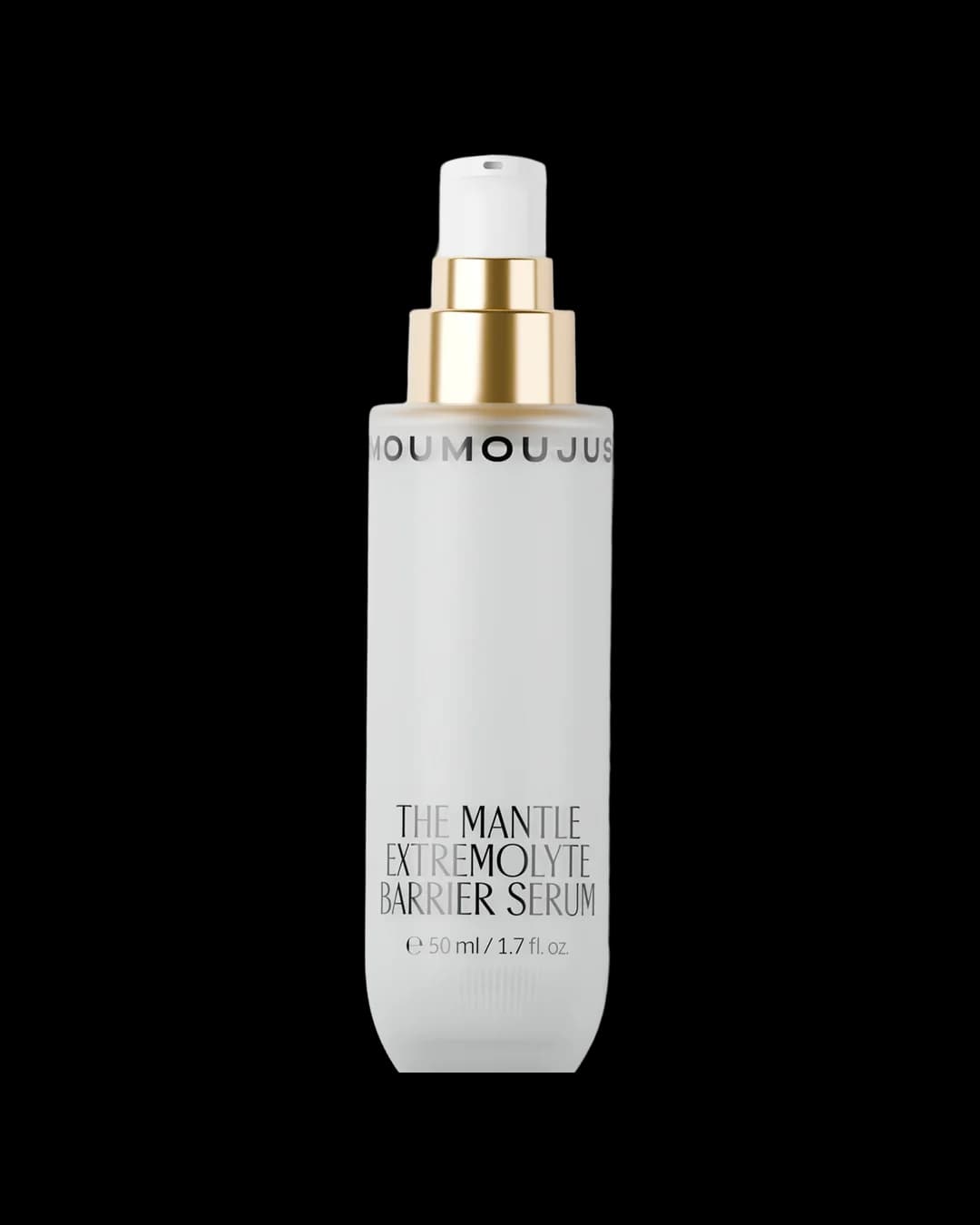
The Mantle is our barrier serum. The following description distinguishes its declared peptide blend from the other peptides discussed in this guide; it is not a finished-product clinical result.
The Mantle contains a 2% peptide ingredient blend. The peptide declared on its ingredient list is N-Prolyl Palmitoyl Tripeptide-56 Acetate. It does not list palmitoyl tripeptide-1, palmitoyl pentapeptide-4 or copper tripeptide-1 (GHK-Cu). The other peptide examples in this guide are not a list of ingredients in The Mantle.
The Mantle is a fragrance-free barrier serum with 1.5% ectoin, a 3% ceramide complex and a 2% peptide blend. The ceramide and peptide percentages refer to ingredient blends, rather than pure ceramide or pure peptide content. A blend percentage cannot be used to calculate a pure-peptide dose without its composition, or to claim delivery to the dermis.
The formula is fragrance-free. Check the complete ingredient list rather than treating an ingredient count, a headline percentage or the absence of fragrance as proof of performance.
Published percentages describe formulation inputs. They are not a clinical potency score or evidence that this serum outperforms another product.
How to Incorporate a Peptide Moisturiser into Your Routine
Peptides are among the most compatible actives in skincare. They pair well with retinoids, vitamin C, niacinamide, AHAs, and BHAs without contraindication. There is no purging period, no photosensitivity risk, and no adjustment phase. This makes a peptide moisturiser suitable for both morning and evening use.
Morning: Cleanse, apply any water-based serums (vitamin C, niacinamide), then apply your peptide moisturiser. Follow with SPF. The moisturiser’s occlusive properties will help seal in earlier layers while delivering peptides throughout the day.
Evening: Cleanse, apply retinol or exfoliating acid if used, then apply your peptide moisturiser as the final step. The overnight contact time (typically 7 to 9 hours) gives peptides an extended window to penetrate and signal, making evening application particularly valuable for anti-ageing results.
Consistency matters more than layering order. Peptides work through cumulative signalling, and each application reinforces the message to produce collagen and repair the barrier. Clinical studies on palmitoyl pentapeptide-4 showed peak results at 12 weeks of twice-daily use, highlighting the importance of sustained, long-term application.
Who Benefits Most from a Peptide Moisturiser?
Peptide moisturisers are effective across a wide range of skin types and concerns, but certain profiles benefit more than others.
Sensitive skin. Unlike retinoids, which can cause redness, flaking, and irritation during the adjustment period, peptides are inherently non-irritating. For anyone with a damaged skin barrier or reactive skin, a peptide moisturiser offers anti-ageing benefits without the inflammatory trade-offs.
Ageing and mature skin. As collagen production declines year after year, the cumulative deficit becomes increasingly visible. Fine lines deepen, skin loses firmness, texture becomes less even. A multi-peptide moisturiser addresses this decline at its root by supporting new collagen synthesis through signal peptides while protecting existing collagen from enzymatic degradation.
Post-procedure skin. After microneedling, laser treatments, or chemical peels, the skin barrier is temporarily compromised and more receptive to active ingredients. A peptide moisturiser with ceramides provides the dual benefit of accelerating barrier recovery while delivering repair signals to freshly stimulated fibroblasts.
Anyone using retinol. Peptides and retinoids work through entirely different mechanisms. Retinol alters gene expression broadly; peptides deliver targeted instructions to specific receptors. Using both means you’re stimulating collagen through two independent pathways, and the peptide moisturiser’s barrier-supportive base can help mitigate the dryness and sensitivity that retinol sometimes causes.
Common Mistakes When Choosing a Peptide Cream
Choosing based on peptide count alone. A product listing seven peptides at undisclosed, potentially negligible concentrations is not necessarily better than one with three peptides at research-backed doses. Concentration and formulation stability matter more than the number of peptides on the label.
Ignoring the base formula. Peptides need a stable, barrier-supportive vehicle to work. A peptide cream in a base full of drying alcohols, synthetic fragrance, or unstable emulsifiers will deliver disappointing results regardless of which peptides it contains.
Expecting overnight results. Peptides work through biological signalling, not cosmetic masking. They instruct cells to produce more collagen, which then needs to be assembled and integrated into the extracellular matrix. Meaningful results typically emerge between 8 and 12 weeks of consistent use. If a peptide cream promises visible results in days, be sceptical.
Skipping SPF. UV exposure triggers MMP activity that breaks down collagen faster than peptides can rebuild it. Without daily sun protection, even the best collagen boosting moisturiser is fighting a losing battle. Think of SPF as the defensive strategy and peptides as the offensive one; you need both.
Peptide moisturising, doses published
The Mantle is a fragrance-free barrier serum with 1.5% ectoin, a 3% ceramide complex and a 2% peptide blend. The ceramide and peptide percentages refer to ingredient blends, rather than pure ceramide or pure peptide content.
Shop The Mantle →References: Robinson LR et al. (2005). Topical palmitoyl pentapeptide provides improvement in photoaged human facial skin. International Journal of Cosmetic Science, 27(3), 155-160. · Pickart L, Vasquez-Soltero JM, Margolina A (2015). GHK peptide as a natural modulator of multiple cellular pathways in skin regeneration. BioMed Research International, 2015, 648108. · Katayama K et al. (1993). A pentapeptide from type I procollagen promotes extracellular matrix production. Journal of Biological Chemistry, 268(14), 9941-9944. · Buenger J, Driller H (2004). Ectoin: an effective natural substance to prevent UVA-induced premature photoaging. Skin Pharmacology and Physiology, 17(5), 232-237. · Maquart FX et al. (2004). Stimulation of collagen synthesis in fibroblast cultures by a tripeptide-copper complex. FEBS Letters, 238(2), 343-346.
Disclosure: This article is published by Moumoujus. Our product, The Mantle, contains peptides and is referenced in this piece. We have aimed to present the research accurately and encourage independent verification of all claims made.