If you’ve spent any time reading skincare ingredient lists, you’ve almost certainly encountered peptides. They appear in serums, moisturisers, eye creams, and an ever-expanding range of clinical formulations. The marketing around peptides for skin tends toward the dramatic: “collagen-boosting,” “wrinkle-erasing,” “skin-transforming.”
The reality is more nuanced, but no less interesting. Peptides are genuinely useful actives with a solid evidence base, provided you understand what they are, how they work, and what separates effective peptide skincare from label decoration.
What Are Peptides in Skincare?
Peptides are short chains of amino acids, the same building blocks that make up proteins. When amino acids link together in chains of roughly 2 to 50 units, they form peptides. Longer chains become polypeptides, and eventually proteins. Collagen, elastin, and keratin (the structural proteins that give skin its firmness, elasticity, and resilience) are all built from amino acid sequences.
In skincare, peptides function as signalling molecules. When applied topically, specific peptides can communicate with skin cells, instructing them to perform particular functions: produce more collagen, reduce inflammation, improve hydration, or strengthen the barrier. Think of them as targeted messages delivered directly to the skin’s cellular machinery.
Naturally occurring peptides have been identified in the human body, each performing a specific biological function, from hormone signalling to antimicrobial defence.
How Peptides Work in Skin
To understand what peptides do for skin, it helps to understand what happens as skin ages. From your mid-twenties onward, collagen production declines by roughly 1% per year. Elastin fibres lose their spring. The extracellular matrix, the scaffolding that holds everything together, begins to thin and fragment.
When collagen breaks down, it produces collagen fragments — which are themselves peptides. These fragments act as a wound-healing signal, telling fibroblasts to produce new collagen to replace what was lost. Synthetic peptides in skincare mimic this natural feedback loop. By applying specific peptide sequences topically, you can trigger the same collagen-production signals without waiting for existing collagen to degrade first.
Peptides don’t force the skin to do something unnatural. They replicate signals the skin already recognises, just delivered at the right time, in the right concentration.
The challenge with peptides in skincare has always been delivery. Peptides are fragile molecules that can be broken down by enzymes before reaching their target cells. Effective peptide formulations use stabilisation techniques (lipid encapsulation, acetylation, or palmitoylation) to protect the peptide and enhance penetration through the stratum corneum.
Types of Peptides Used in Skincare
Not all peptides serve the same purpose. The best peptides for skin fall into four broad categories, each with a distinct mechanism of action.
1. Signal Peptides
Signal peptides communicate directly with fibroblasts, the cells responsible for producing collagen, elastin, and other structural proteins. Palmitoyl pentapeptide-4 (Matrixyl) is the most widely studied example. Research published in the International Journal of Cosmetic Science demonstrated that Matrixyl stimulated collagen I, collagen III, and fibronectin synthesis in human fibroblast cultures. In clinical trials, it visibly reduced wrinkle depth over 12 weeks of topical application.
Other notable signal peptides include palmitoyl tripeptide-1 and palmitoyl tetrapeptide-7, often used in combination. These peptides work synergistically to stimulate extracellular matrix repair while simultaneously reducing the chronic low-grade inflammation (inflammaging) that accelerates collagen breakdown.
2. Carrier Peptides (Including Copper Peptides)
Carrier peptides deliver trace minerals to the skin, most notably copper. Copper peptides for skin, particularly GHK-Cu (copper tripeptide-1), are among the most extensively researched peptides in dermatology. GHK-Cu was first identified by Dr Loren Pickart in the 1970s, and decades of subsequent research have demonstrated its ability to stimulate collagen synthesis, promote wound healing, increase the production of glycosaminoglycans (the skin’s natural moisture reservoirs), and exert antioxidant effects.
What makes copper peptides particularly interesting is their versatility. A 2018 review in the Journal of Cosmetic Dermatology summarised evidence showing GHK-Cu influences over 4,000 human genes, with effects spanning tissue repair, anti-inflammatory signalling, and antioxidant enzyme activation. Copper peptides for skin are most effective in leave-on formulations at concentrations typically between 0.01% and 1%.
Human genes are influenced by GHK-Cu (copper tripeptide-1), affecting everything from collagen synthesis to antioxidant defence and tissue remodelling.
3. Enzyme-Inhibitor Peptides
These peptides work by slowing the breakdown of existing structural proteins. Matrix metalloproteinases (MMPs) are enzymes that degrade collagen and elastin as part of normal tissue remodelling, but UV exposure, pollution, and chronic inflammation cause MMP activity to spike, accelerating the destruction of the extracellular matrix far beyond what the body can rebuild.
Enzyme-inhibitor peptides suppress this excess MMP activity, effectively slowing the rate at which the skin loses its structural proteins. Soy-derived peptides and rice-derived peptides are common examples found in formulations targeting photoaged skin.
4. Neurotransmitter Peptides
Sometimes called “Botox-like” peptides, neurotransmitter peptides work by reducing the intensity of muscle contractions beneath the skin. Acetyl hexapeptide-3 (Argireline) is the most recognised example. It inhibits the SNARE complex involved in neurotransmitter release, resulting in subtly relaxed facial muscles and reduced appearance of expression lines.
The effect is far milder than injectable neurotoxins, but clinical studies have shown measurable wrinkle-depth reduction with consistent topical use, typically around 15-30% improvement over 28 days.
Benefits of Peptides for Skin
The published research on peptides in skincare points to four core benefits, each supported by clinical or in-vitro evidence.
Collagen production. Signal peptides like Matrixyl and copper peptides support fibroblasts in producing new collagen. This addresses the root cause of fine lines and loss of firmness rather than simply masking symptoms on the surface.
Barrier repair. Certain peptides support the production of antimicrobial peptides (AMPs) and structural proteins in the epidermis, reinforcing the skin’s physical and immune barriers. When combined with ceramides and ectoin, peptides contribute to a multi-layered approach to barrier restoration. Ceramides rebuild the lipid matrix, ectoin shields cell membranes, and peptides strengthen the structural protein network.
Anti-inflammatory activity. Several peptides, including palmitoyl tetrapeptide-7, have demonstrated the ability to reduce IL-6 and other pro-inflammatory cytokines. This makes peptides particularly relevant for sensitive or reactive skin types where chronic inflammation drives premature ageing and barrier dysfunction.
Hydration support. Peptides that increase glycosaminoglycan synthesis, notably copper peptides, help the skin produce more of its own hyaluronic acid. Rather than applying hyaluronic acid topically and relying on external humidity, peptides encourage the skin to generate moisture-binding molecules from within.
Peptides vs Retinol: Complement, Not Competition
Retinol (vitamin A) remains the most evidence-backed anti-ageing active in skincare. It accelerates cell turnover, stimulates collagen production, and regulates pigmentation. But retinol comes with trade-offs: irritation, dryness, photosensitivity, and a sometimes difficult adjustment period that can last weeks.
Peptides work through an entirely different pathway. Where retinol alters gene expression in skin cells broadly, peptides deliver targeted instructions to specific receptors. They don’t cause irritation, don’t increase sun sensitivity, and don’t require a “retinisation” period. This makes them ideal for sensitive skin types who can’t tolerate retinoids, and equally effective as a complementary active for those who already use retinol.
Retinol accelerates. Peptides signal. Using both means you’re supporting collagen through two independent mechanisms, which is why the best routines often include both.
A practical approach: use retinol in the evening (when photosensitivity matters less) and a peptide-rich moisturiser morning and night to provide continuous signalling support and barrier reinforcement.
How to Use Peptides in Your Routine
Peptides are among the most compatible actives in skincare. They work alongside retinoids, vitamin C, niacinamide, AHAs, BHAs, and ceramides without conflict. There are no known contraindications, no purging period, and no photosensitivity risk. This makes them suitable for both morning and evening use.
The most important consideration is product format. Peptides are most effective in leave-on formulations (serums and moisturisers) where they remain in contact with the skin long enough to penetrate and signal. Cleansers and toners rinse away too quickly to deliver meaningful peptide concentrations to the deeper epidermis.
Application order matters less than consistency. Apply peptide products after water-based serums and before heavier occlusives. If your moisturiser already contains peptides alongside barrier ingredients like ceramides, you’re covering multiple steps in a single product.
What to Look For in a Peptide Product
The peptide skincare market is crowded, and not every product delivers peptides at effective concentrations or in stable formulations. Here’s what separates meaningful peptide products from marketing exercises.
Named peptide sequences. Look for specific peptide names on the INCI list: palmitoyl pentapeptide-4, copper tripeptide-1, acetyl hexapeptide-3. Vague terms like “peptide complex” without further detail often indicate a proprietary blend at undisclosed (and potentially negligible) concentrations.
Disclosed concentrations. Peptides are effective at low concentrations, but “low” still means a specific amount. If a brand won’t tell you the percentage, you have no way of knowing whether you’re getting a clinically relevant dose or a trace amount added for label appeal.
Complementary formulation. The best peptide products pair peptides with ingredients that address different layers of skin health. Ceramides repair the lipid barrier. Ectoin shields cell membranes from environmental stress. Peptides signal structural repair at the dermal level. A product that combines all three is working across the full depth of the skin rather than targeting a single mechanism.
Fragrance-free formulation. Synthetic fragrance is a common sensitiser that can trigger the very inflammation peptides are meant to reduce. If barrier health and sensitivity are concerns, a fragrance-free base ensures nothing in the formula undermines the active ingredients.
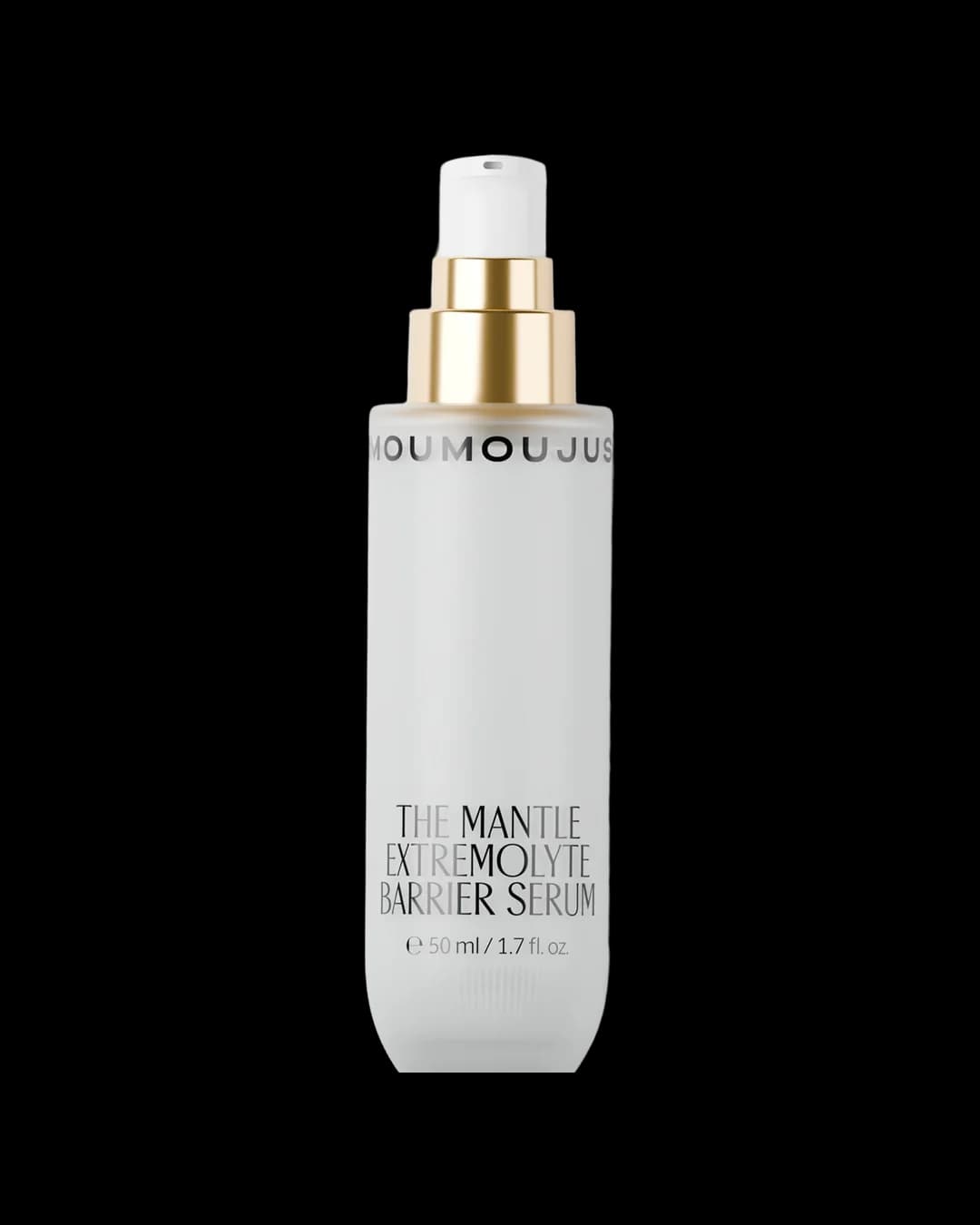
The peptide concentration in The Mantle Extremolyte Barrier Serum by Moumoujus, a fragrance-free formula that pairs 2% peptide with a 3% ceramide complex, 1.5% ectoin and exosomes, with the key doses published.
Peptides are not a replacement for sunscreen, retinoids, or a consistent routine. But they are one of the most versatile and well-tolerated actives available, effective across skin types, compatible with virtually every other ingredient, and backed by decades of published research. For anyone building a science-driven routine, peptides belong in the conversation.
The question, as always, is not whether the ingredient works. It’s whether the product you’re using delivers it at a concentration that matters, in a formulation designed to get it where it needs to go.
2% peptide, dose published
The Mantle delivers 2% peptides alongside ceramides, ectoin, and exosomes, with the key doses published.
Shop The Mantle →References: Katayama K et al. (1993). A pentapeptide from type I procollagen promotes extracellular matrix production. Journal of Biological Chemistry, 268(14), 9941-9944. · Robinson LR et al. (2005). Topical palmitoyl pentapeptide provides improvement in photoaged human facial skin. International Journal of Cosmetic Science, 27(3), 155-160. · Pickart L, Vasquez-Soltero JM, Margolina A (2015). GHK peptide as a natural modulator of multiple cellular pathways in skin regeneration. BioMed Research International, 2015, 648108. · Blanes-Mira C et al. (2002). A synthetic hexapeptide (Argireline) with antiwrinkle activity. International Journal of Cosmetic Science, 24(5), 303-310.
Disclosure: This article is published by Moumoujus. Our product, The Mantle, contains peptides and is referenced in this piece. We have aimed to present the research accurately and encourage independent verification of all claims made.