One day your skin is fine. The next, your usual moisturiser stings. Your foundation feels like sandpaper. A product you’ve used for years suddenly leaves your face red and irritated. If you’re wondering why your skin is so sensitive all of a sudden, you’re not imagining things, and you’re far from alone.
Sensitive skin affects an estimated 60-70% of women and 50-60% of men at some point in their lives. But here’s the part most people miss: true sensitivity is rarely something you’re born with. In the vast majority of cases, it’s something that happens to your skin, and it almost always traces back to one structure.
What Is Sensitive Skin, Really?
Sensitive skin is not a clinical diagnosis. Dermatologists classify it as a condition characterised by heightened reactivity (stinging, burning, tightness, or redness) in response to stimuli that wouldn’t normally provoke a reaction. It can affect any skin type, from oily to dry, and can develop at any age.
What makes the term confusing is that “sensitive skin” describes a symptom, not a root cause. When your skin is sensitive to touch, or when products that previously felt fine now cause irritation, something has changed at a structural level. And that something is almost always your skin barrier.
The Skin Barrier Connection
Your skin barrier, the outermost layer of the epidermis known as the stratum corneum, is a precisely engineered structure. It’s composed of flattened skin cells (corneocytes) held together by a lipid matrix of ceramides, cholesterol, and fatty acids in an approximately 1:1:1 ratio. Think of it as a brick wall: corneocytes are the bricks, and those lipids are the mortar.
When the mortar breaks down, everything gets in. Irritants, allergens, bacteria. And the water inside your skin gets out.
A healthy barrier is selective. It keeps moisture locked in and environmental aggressors locked out. But when that lipid matrix is disrupted (when ceramide levels drop, when the acid mantle shifts, when tight junctions weaken) nerve endings that sit just below the surface become exposed. Suddenly, ingredients that were previously tolerated now trigger inflammation. That’s not an allergy. That’s a compromised barrier.
of people who self-identify as having sensitive skin show measurable impairment in skin barrier function, according to research published in the British Journal of Dermatology.
7 Reasons Your Skin Became Sensitive Suddenly
If your skin wasn’t always reactive, something shifted. These are the most common culprits, backed by published dermatological research.
1. Over-exfoliation
AHAs, BHAs, retinoids, scrubs, enzyme masks. Modern skincare routines are loaded with exfoliants. Used correctly, they accelerate cell turnover. Used excessively, they strip away the lipid barrier faster than your skin can rebuild it. This is the single most common cause of sudden sensitivity in people with previously normal skin.
2. Fragrance and Essential Oils
Fragrance is the number one cause of contact dermatitis in cosmetics. The EU’s Scientific Committee on Consumer Safety has identified over 80 individual fragrance allergens. Even “natural” essential oils like lavender and tea tree contain linalool and limonene, which oxidise on the skin and become sensitising over time. The damage is cumulative, and you may tolerate a product for months before the threshold tips.
3. Climate and Environmental Shifts
Cold air holds less moisture. Central heating strips it further. UV exposure degrades the lipid barrier directly. Pollution particles (particularly PM2.5) generate free radicals on the skin surface, triggering low-grade inflammation. A change of season, a house move, or even a long-haul flight can be enough to push a borderline barrier into dysfunction.
4. Hormonal Changes
Oestrogen plays a direct role in skin barrier function, ceramide production, and sebum regulation. Perimenopause, menopause, pregnancy, and even monthly hormonal fluctuations can alter barrier integrity. Research shows that skin barrier recovery slows measurably during the luteal phase of the menstrual cycle.
5. Stress and Sleep Deprivation
Chronic stress elevates cortisol, which degrades hyaluronic acid production, reduces ceramide synthesis, and impairs the skin’s natural repair cycle. Sleep deprivation compounds this: barrier recovery is primarily a nocturnal process. Studies show that just two nights of poor sleep significantly delays skin barrier repair after tape-stripping.
6. Hard Water
Hard water contains high levels of calcium and magnesium salts, which raise the skin’s surface pH above its optimal range of 4.5-5.5. This disrupts the acid mantle and can impair the enzymes responsible for lipid processing in the stratum corneum. A 2017 study in the Journal of Investigative Dermatology found that hard water exposure significantly increased sensitivity to sodium lauryl sulphate, even in people with no history of skin problems.
7. Product Overload
The average person now uses 7-12 skincare products daily. Each one introduces surfactants, preservatives, emulsifiers, and actives that the barrier must process. Even individually gentle ingredients can become irritating in combination. The more products layered, the higher the cumulative irritation potential and the greater the chance of barrier fatigue.
Signs of a Damaged Skin Barrier
Not all sensitivity looks the same. Damaged skin barrier signs can range from obvious to subtle. If you’re experiencing two or more of the following, your barrier is likely compromised:
- Stinging or burning when applying products (even water-based ones)
- Persistent redness that doesn’t correlate with specific triggers
- Skin that feels tight within minutes of cleansing
- Increased reactivity to products you’ve used before without issue
- Rough, flaky patches alongside oily areas (impaired lipid balance)
- Skin that looks dull, dehydrated, or “papery” in texture
- Visible fine lines that appear worse than usual (dehydration lines)
- Breakouts in areas that don’t normally break out
The hallmark of barrier damage is reactivity without a clear cause. If everything irritates your skin, the problem isn’t the products. It’s the barrier.
How to Repair Sensitive Skin
Barrier repair is not instant. Depending on the extent of the damage, full recovery takes 2-8 weeks. But the approach is well established in dermatological literature, and it comes down to three principles.
Strip Back Your Routine
Pause all actives: retinoids, vitamin C, AHAs, BHAs, and anything exfoliating. Reduce your routine to a gentle cleanser, a barrier-focused moisturiser, and SPF. Nothing else. Your skin needs space to recover without additional chemical demands.
Replenish the Lipid Matrix
The fastest route to barrier repair is replacing the lipids that have been lost. Ceramides are the most critical, comprising roughly 50% of the barrier’s lipid content. But ceramides alone aren’t enough. Research consistently shows that the most effective barrier repair formulations supply ceramides, cholesterol, and free fatty acids together, in ratios that mimic the skin’s own composition.
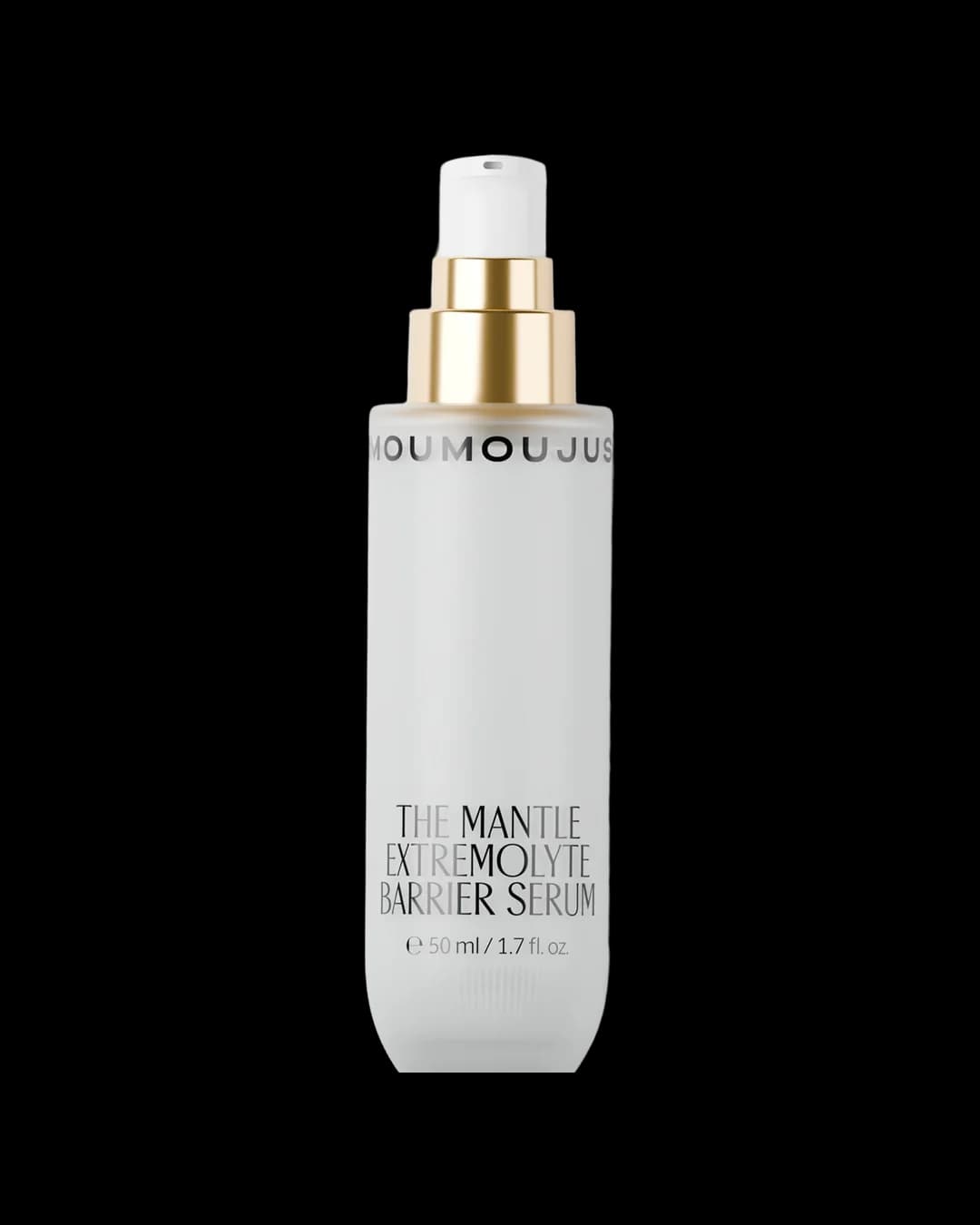
This is the principle behind The Mantle by Moumoujus. Its 3% SK‑Influx® ceramide complex delivers ceramides, cholesterol, and fatty acids in a multi-lamellar structure that integrates with the skin’s existing lipid architecture rather than just sitting on top. Combined with 1.5% ectoin (a natural extremolyte that shields cells from environmental stress) and a fragrance-free base, it’s formulated specifically for skin that can’t tolerate anything else.
Protect While You Heal
A damaged barrier means increased trans-epidermal water loss (TEWL) and heightened vulnerability to UV damage. Use a mineral SPF during the day and an occlusive layer at night to prevent further moisture loss. Avoid hot water on your face; lukewarm only. And resist the temptation to add new products. Every additional ingredient is a potential irritant for compromised skin.
Ingredients That Help vs. Ingredients That Hurt
When your barrier is compromised, ingredient selection becomes critical. Not everything marketed as “gentle” or “for sensitive skin” actually is.
Ingredients that support barrier repair:
- Ceramides (NP, AP, EOP) to rebuild the lipid matrix
- Cholesterol & fatty acids, essential co-lipids for ceramide function
- Ectoin, which protects cell membranes from stress and UV damage
- Niacinamide (2-5%) to stimulate ceramide synthesis
- Centella asiatica for its anti-inflammatory and collagen-supporting properties
- Squalane, a biomimetic emollient that is non-comedogenic
- Panthenol (provitamin B5) for hydration and wound healing
Ingredients to avoid during recovery:
- Fragrance (synthetic or natural), the top contact allergen
- Denatured alcohol (alcohol denat.), which strips barrier lipids
- Sodium lauryl sulphate, an aggressive surfactant
- Essential oils, which contain oxidising sensitisers
- High-concentration AHAs/BHAs that further exfoliate damaged skin
- Retinoids (temporarily), as they increase TEWL on compromised barriers
The difference between a product that helps and one that hurts often isn’t about the hero ingredient. It’s about what’s around it. A ceramide moisturiser with added fragrance is undermining its own purpose. A “soothing” cream packed with essential oils is soothing for marketing, not for your skin.
When to See a Dermatologist
Most cases of sudden sensitivity resolve within 4-8 weeks with a simplified routine and barrier-focused care. However, persistent sensitivity that doesn’t respond to these measures may indicate an underlying condition such as rosacea, contact dermatitis, or perioral dermatitis — all of which mimic barrier damage but require specific treatment. If your symptoms persist beyond two months, or if you develop persistent pustules, swelling, or pain, consult a dermatologist.
The Bottom Line
Sudden skin sensitivity is your barrier sending a distress signal. It isn’t a permanent skin type. It’s a temporary state caused by identifiable factors and fixable with the right approach. The science is clear: replenish the lipid matrix, eliminate irritants, protect while healing, and give it time.
What your skin needs isn’t more products. It’s fewer products, chosen more carefully, with ingredients at concentrations that actually do something. That’s a philosophy worth building a routine around.
Built for sensitive, barrier-damaged skin
The Mantle delivers a 3% ceramide complex, 1.5% ectoin and 2% peptide in a fragrance-free, vegan formula, with the key doses published. Nothing hidden.
Shop The Mantle →References: Misery L, et al. “Sensitive skin in the American population: prevalence, clinical data, and role of the dermatologist.” Int J Dermatol. 2011. Rawlings AV, Harding CR. “Moisturization and skin barrier function.” Dermatol Ther. 2004. Danby SG, et al. “The effect of water hardness on surfactant deposition after washing and subsequent skin irritation.” J Invest Dermatol. 2018. Draelos ZD. “The science behind skin care: ceramides.” J Cosmet Dermatol. 2005.
Disclosure: This article is published by Moumoujus. The Mantle is referenced as an example of barrier-focused formulation. We encourage you to evaluate all product claims independently.